
”Interpreting the Role of Religion, Social, Management of Library, History, and Literature in Growing the Literacy Culture”
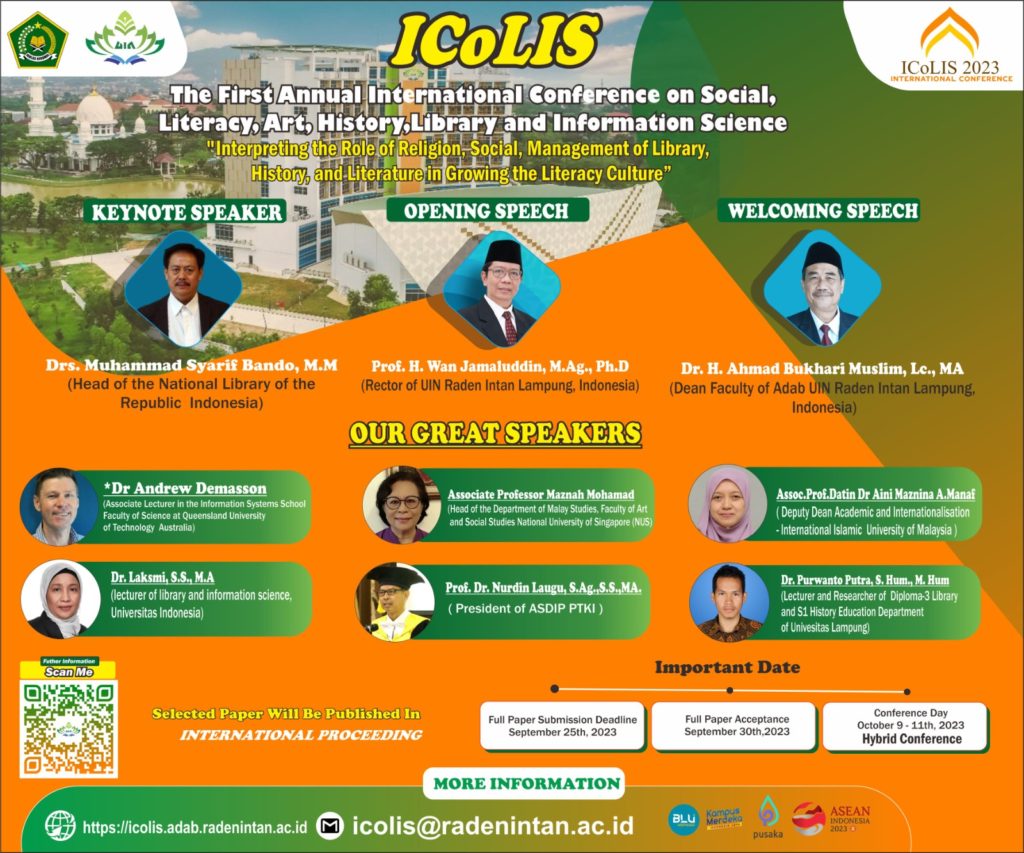
The conference aims to explore and address key issues and trends in the following areas:
Literacy: This track focuses on literacy studies, including theories and practices related to reading, writing, and critical thinking. It encompasses the examination of literacy skills, strategies, and pedagogies across different educational contexts and disciplines. The aim is to promote effective literacy instruction and develop critical and analytical thinking skills among learners.
Literature and Culture: This track explores the intersection of literature and culture, emphasizing the analysis of literary works within their cultural, historical, and social contexts. It examines various literary genres, styles, and themes, and their representation of cultural values, identities, and ideologies. The aim is to foster a deeper understanding and appreciation of literature as a reflection of cultural diversity and human experiences.
Interdisciplinary Literature: This track encourages interdisciplinary approaches to literature, encompassing the integration of literary studies with other disciplines such as psychology, sociology, philosophy, and linguistics. It aims to explore new perspectives and methodologies in analyzing and interpreting literary texts, fostering innovative research and interdisciplinary collaborations.
Social Science: This track encompasses a broad range of disciplines within the social sciences, including sociology, anthropology, psychology, political science, and economics. It explores social phenomena, human behavior, societal structures, and cultural dynamics, aiming to deepen our understanding of social processes and contribute to the development of evidence-based social policies.
Literacy of Information: This track focuses on information literacy, encompassing the skills and competencies required to access, evaluate, and ethically use information in various contexts. It explores strategies for navigating the digital landscape, promoting critical thinking, and empowering individuals to become informed and responsible consumers and producers of information.
Literacy of Religion: This track explores the intersection of literacy and religion, examining religious texts, practices, and beliefs. It encompasses the study of religious literacy, interfaith dialogue, religious education, and the role of religion in shaping individual and collective identities. The aim is to foster understanding, tolerance, and dialogue among diverse religious traditions.
Library and Information Science: This track focuses on the management, organization, and dissemination of information resources in libraries and other information settings. It explores topics such as library management, information retrieval, digital libraries, data management, and information services. The aim is to promote best practices in library and information science and facilitate the efficient and effective access to information.
History: This track encompasses the study of the past, including historical events, individuals, societies, and cultures. It explores historical research methods, the interpretation of primary sources, and the analysis of historical narratives. The aim is to deepen our understanding of the past and its impact on the present, fostering historical consciousness and critical thinking.
Management: This track focuses on management theories, practices, and strategies applicable to various organizational contexts. It encompasses topics such as organizational behavior, human resource management, strategic management, and leadership. The aim is to enhance managerial skills, promote effective organizational practices, and facilitate the exchange of knowledge and experiences in management.
Management of Library: This track specifically addresses the management of libraries and information centers, exploring topics such as collection development, library marketing, user services, library technologies, and library administration. The aim is to enhance the management practices of libraries, foster innovation, and improve the delivery of information services to users.